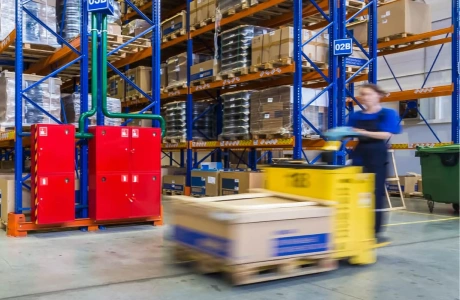
Warehouse operations cover the day-to-day activities that keep goods moving through a facility. This includes receiving, storage, inventor...
By Hector Sunol•Apr 28, 2026•14 MIN READ
Warehouse operations cover the day-to-day activities that keep goods moving through a facility. This includes receiving, storage, inventory control, picking, packing, shipping, returns, labor planning, and equipment management.
For warehouse and distribution center leaders, these tasks affect far more than the warehouse floor. They shape order speed, inventory accuracy, labor costs, customer satisfaction, and profitability. When one process slows down, the impact can spread fast. Poor inventory accuracy can delay picking, a weak layout can increase travel time, and too many manual steps can create errors that slow fulfillment.
That is why efficient warehouse operations matter. A well-run warehouse helps products move faster, reduces wasted time, and gives decision-makers better control over cost and service levels. Today, warehouses also need speed, visibility, and flexibility to keep up with customer expectations, labor challenges, and tighter delivery windows.
In this article, we will cover what warehouse operations include, why they matter, the most common challenges warehouses face, and practical ways to improve layout, inventory management, staff performance, and technology use.
Functions and Processes
Efficient operation depends on many connected warehouse processes. Each one supports the next step, from the moment goods arrive to the moment orders leave the facility. When one area improves, the rest of the operation often benefits too. For example, better inventory accuracy can speed up picking, while stronger receiving practices can reduce downstream errors.
Below are the core functions that help a warehouse or distribution center run smoothly.
1. Inventory Management
Inventory management helps teams track product quantities, locations, and movement across the warehouse. With accurate inventory data, businesses can reduce stockouts, avoid excess stock, and fulfill orders with more confidence.
2. Receiving
Receiving starts when inbound shipments arrive at the warehouse. During this step, teams unload goods, inspect products, verify purchase orders, and record items in the system.
This process sets the tone for the rest of the operation. If receiving teams miss damaged goods, wrong quantities, or shipment discrepancies, those issues can affect storage, picking, inventory records, and customer orders later.
3. Storage
Storage focuses on placing products in the right areas after receiving. Teams may organize inventory by SKU, size, weight, demand, product type, or handling needs.
A strong storage process makes products easier to find and move. As a result, warehouse staff spend less time searching, avoid unnecessary travel, and keep daily workflows moving with fewer disruptions.
4. Order Picking
Order picking begins after a customer order is placed. Staff locate and retrieve the required items from storage so the order can move to packing.
This step has a major impact on fulfillment speed and accuracy. Clear picking paths, smart slotting, and mobile tools can reduce travel time and help workers find the right products faster.
5. Packing
Packing prepares picked items for shipment. During this step, teams package products, add labels, and make sure orders are ready to move safely through the delivery process.
Good packing protects products in transit and helps control shipping costs. It also reduces the risk of returns caused by damaged goods, incorrect labels, or poor packaging choices.
6. Shipping
Shipping is the final outbound step before orders leave the warehouse. Teams load orders onto trucks, prepare shipping documents, and dispatch goods to customers, stores, or distribution centers.
7. Stock Counting
Stock counting helps verify that physical inventory matches the records in the system. Warehouses may use regular cycle counts, full inventory audits, or a mix of both.
This process helps teams find discrepancies before they become bigger problems. It also supports better forecasting, cleaner inventory records, and more accurate order fulfillment.
8. Returns Management
Returns management covers the process of receiving, inspecting, and handling returned goods. It’s when you decide whether items can be restocked, repaired, recycled, or written off.
9. Technology Management
Modern warehouses rely on systems and devices to keep work moving. This can include WMS platforms, barcode scanners, label printers, tablets, mobile apps, and other connected tools.
However, technology only creates value when teams manage it well. Warehouses need regular oversight, updates, troubleshooting, and user support to reduce downtime and keep workflows reliable.
10. Workforce Management
Workforce management includes training, scheduling, task assignment, and performance tracking. It helps managers place the right people in the right roles at the right time. This function is especially important during peak seasons, labor shortages, or high-volume periods.
11. Equipment Management
Equipment management covers the tools and assets that support daily warehouse tasks. This includes forklifts, conveyors, pallet racks, dock equipment, carts, and other materials handling tools. When equipment receives proper maintenance and oversight, teams can work safely and efficiently.
The Importance of Streamlining Operations
Streamlined warehouse operations directly affect cost, speed, accuracy, and customer satisfaction. When processes run smoothly, orders move faster, inventory records stay cleaner, and staff spend less time fixing avoidable mistakes. As a result, the business can reduce waste, control carrying warehouse costs, and handle more volume without adding unnecessary pressure to the operation.
This is especially important in today’s fast-moving e-commerce and distribution environment. Customers expect quick shipping, accurate orders, and clear updates. Therefore, warehouses need processes that can keep up without creating more errors or delays.
Modern tools can support these improvements by automating repetitive tasks, improving real-time visibility, and connecting key systems such as the WMS, WMS App, and Workflows. With the right systems in place, businesses can keep orders moving, respond faster to changes, and control costs as demand grows.
Common Challenges in Operations
Even well-run warehouses face problems that can slow work, increase costs, and affect customer service. Some issues start small, such as a missed count or delayed shipment update. However, when these small problems turn into repeated warehouse management mistakes, they can spread across receiving, storage, picking, packing, and shipping.
Below are some of the most common challenges that affect warehouse operations today.
Poor Inventory Management – Inaccurate counts, stockouts, and overstocking can lead to lost sales, higher carrying costs, and poor use of warehouse space.
Lack of Real-Time Visibility – Without timely data, it becomes harder to track inventory movement, respond to delays, and adjust daily work.
Inefficient Warehouse Layout – A poor warehouse layout increases travel time, slows picking, and leaves valuable floor space underused.
Limited Technology Adoption – Manual workflows, paper-based processes, and disconnected systems can create delays and errors as order volume grows.
Order Inaccuracies – Picking and packing mistakes can lead to returns, reshipments, extra costs, and unhappy customers.
Rising E-Commerce Demands – Growing online order volume puts more pressure on warehouses to ship faster, stay accurate, and provide clear updates.
Labor Management Issues – Labor challenges can make it harder to meet order volume during peak seasons, demand swings, or staff shortages.
Supply Chain Disruptions – Supplier delays, transportation issues, weather events, and other disruptions can interrupt inventory flow and delay fulfillment.
Key Principles for Efficient Operations
Efficient warehouse operations depend on consistent, practical principles. The goal is to reduce waste, improve accuracy, and keep work moving from receiving to shipping with fewer delays.
Just-in-Time vs. Just-in-Case
A just-in-time (JIT) approach reduces storage costs by bringing in inventory only when needed. This can work well when demand is steady and suppliers are reliable. However, supply chain disruptions have shown why warehouses also need a just-in-case (JIC) strategy.
JIC keeps extra stock available for high-risk, high-demand, or hard-to-replace items. This gives the warehouse more protection when suppliers run late, transportation slows down, or demand shifts without warning.
The right approach is often a balance of both. A Gartner study found that over 60% of supply chain leaders are reviewing their inventory strategies to strike this balance. Modern WMS platforms can support this by tracking stock levels in real time, improving demand forecasting, and helping identify which items need buffer stock.
Optimize Warehouse Layout
A clear warehouse layout helps products move faster. It reduces walking time, prevents bottlenecks, and makes daily work easier to follow. For example, placing fast-moving products closer to packing areas can shorten picking routes and speed up fulfillment.
Simple picking paths also matter. When workers can move through the warehouse without backtracking or searching, orders flow more smoothly.
Implement Lean Principles
Lean principles help remove wasted time, wasted motion, and unnecessary steps from warehouse operations. This is the goal of lean warehousing: to create smoother workflows with less waste. Practices such as 5S (Sort, Set in Order, Shine, Standardize, and Sustain) create cleaner work areas and more consistent processes. Kaizen, or continuous improvement, also supports small, steady improvements over time.
Moreover, Deloitte reports that lean methods can reduce warehouse costs by up to 25%. When combined with Workflows automation, lean practices can reduce manual handoffs, automate repetitive tasks, and help work move faster with fewer errors.
Warehouse Layout and Organization
Warehouse layout affects speed, accuracy, and space use. A clear floor plan reduces travel time, prevents bottlenecks, and helps products move smoothly from storage to fulfillment.
Product Segmentation
Product segmentation groups items in ways that support faster picking and fewer errors. For example, heavy or bulky products can stay in one zone, while high-demand items can be stored near packing stations.
This setup reduces walking distance and keeps fast-moving goods easier to access.
Optimized Storage Systems
The right storage systems help warehouses use space more efficiently. Pallet racking, mezzanines, and automated storage and retrieval systems (AS/RS) can improve access while making better use of vertical space.
Dimensioning tools can also support smarter storage decisions. By capturing product size and weight, they can help place goods in the best available location and reduce wasted space.
Clear Signage and Labeling
Clear signage, barcode labels, and organized aisles help workers move through the warehouse with less confusion. When locations are easy to identify, staff spend less time searching and more time completing orders.
Barcode scanning connected to the WMS can improve this process. It helps confirm item locations, reduce manual errors, and speed up daily tasks.
Inventory Management and Optimization
Strong inventory control keeps warehouse operations accurate, cost-effective, and easier to manage. Without reliable stock data, warehouses can face stockouts, excess inventory, wasted space, and delayed orders.
Accurate Demand Forecasting
Demand forecasting helps set the right stock levels before issues happen. By reviewing sales history, seasonal trends, and customer behavior, warehouses can reduce stockouts and avoid excess inventory.
According to McKinsey, companies using advanced analytics in demand planning can reduce forecasting errors by up to 50%. Better forecasts also support purchasing, storage, labor, and fulfillment planning.
ABC Analysis
ABC analysis sorts products by value and priority. “A” items are high-value products that need closer control. “B” items have medium value, while “C” items have lower value or slower movement.
This method helps focus time and space on the products that matter most. It keeps high-value items easier to monitor and prevents slow-moving products from taking up prime storage space.
Regular Cycle Counts
Cycle counting keeps inventory records accurate without stopping the full operation. Instead of counting everything at once, warehouses count smaller groups of items on a set schedule. This helps catch discrepancies early and prevent costly mistakes. The WMS App can support this by allowing staff to update records directly from the warehouse floor.
Automation Support
Automation makes inventory management faster and more reliable. Dimensioning tools capture item size and weight, which helps place products in the right location and reduce wasted space.
Automated Workflows can also trigger alerts for low stock, reorder points, and missed counts. This reduces manual follow-ups, prevents shortages, and improves order accuracy.
Staff Training and Performance Management
Well-trained staff keep warehouse operations accurate, safe, and productive. When employees understand their roles and follow clear standards, they make fewer mistakes and complete tasks with more confidence.
Clear Job Roles and Expectations
Workers need to know what each role requires. Written job descriptions and standard operating procedures (SOPs) help create that clarity. Clear expectations also make daily work more consistent. As a result, employees can follow the right steps, reduce errors, and avoid confusion during busy shifts.
Ongoing Training and Development
Training should not stop after onboarding. Moreover, ongoing programs help employees learn new skills and stay updated with the latest technologies. According to LinkedIn’s 2024 Workplace Learning Report, 94% of employees say they would stay longer at a company that invests in their learning. Regular sessions on safety, workflows, and software increase both performance and morale.
Performance Tracking and Feedback
Performance tracking helps identify what is working and where support is needed. Regular feedback also gives employees a clear path to improve. Strong training and performance management can reduce turnover, lower errors, and help the warehouse run with more consistency.
Automation and Technology
Automation and digital tools help warehouse operations move faster and more accurately. They also reduce manual work, improve visibility, and help staff focus on tasks that need more attention. When used well, this type of technology improves warehouse efficiency by making daily processes faster, clearer, and easier to control.
Warehouse Management System (WMS)
A WMS is the backbone of warehouse technology. It tracks inventory in real time, supports order fulfillment, and helps plan labor more effectively. Gartner predicts that by 2026, over 70% of warehouses will use advanced WMS features such as AI-driven forecasting. The Supply Chain Orchestrator WMS goes further by connecting data, tasks and more across modules for better end-to-end visibility.
Pallet and Parcel Dimensioning
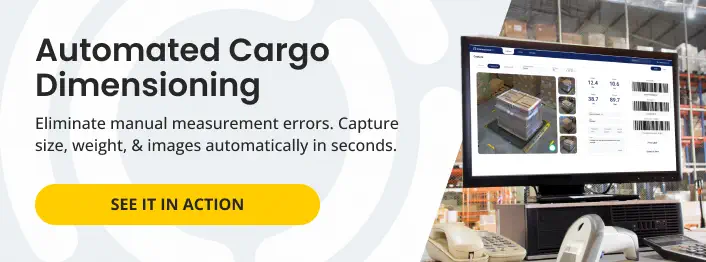
Dimensioners capture length, width, height, weight, and images in seconds. This reduces manual errors and speeds up receiving. The Supply Chain Orchestrator Dimensioning System automates this step, helping warehouses optimize storage space and streamline billing.
Warehouse Workflows
Automated workflows connect processes and remove repetitive tasks. They can trigger alerts, send customer emails, update data fields, or create tasks automatically. As a result, work moves with fewer manual handoffs, fewer delays, and fewer mistakes.
Barcode Scanning and RFID
Barcode scanning and RFID help track products faster and more accurately. For example, the WMS App lets workers scan items directly on the warehouse floor. This improves speed, reduces picking errors, and keeps inventory updates more accurate.
Robotic Picking and Sorting
Robots can pick, move, and sort products with speed and accuracy. They can also help reduce pressure caused by labor shortages. According to ABI Research, robots will handle more than 50% of warehouse picking tasks globally by 2030.
Automation and technology help warehouses process higher volumes, lower costs, and deliver orders faster. They also make it easier to keep up with rising customer expectations.
Conclusion
Efficient warehouse operations help reduce errors, control costs, and move orders faster. When layout, inventory, training, and technology work together, the warehouse becomes easier to manage and more prepared for daily demand.
Modern tools can also make this work easier. Platforms such as Supply Chain Orchestrator connect key modules, including WMS, Workflows, WMS App, Customer Portal, and Dimensioning System. These tools help reduce manual work, improve visibility, and support smoother processes across the warehouse.
However, improvement should not be a one-time project. Warehouses need to review their processes often, remove bottlenecks, and invest in systems that support long-term growth. With the right strategy and tools, they can improve performance today and build a stronger operation for the future.
FAQs
1. What are the main functions of warehouse operations?
The main functions of warehouse operations include inventory management, receiving, storage, order picking, packing, shipping, stock counting, returns management, workforce management, technology management, and equipment management.
2. Why are warehouse operations important?
Warehouse operations are important because they affect order speed, inventory accuracy, labor costs, customer satisfaction, and profitability. When processes run smoothly, warehouses can reduce errors, control costs, and move orders faster.
3. What are common challenges in warehouse operations?
Common challenges include poor inventory management, lack of real-time visibility, inefficient layout, limited technology adoption, order inaccuracies, labor issues, rising e-commerce demand, and supply chain disruptions.
4. How can you improve warehouse operations efficiency?
You can improve warehouse operations efficiency by optimizing layout, improving inventory accuracy, training staff, using cycle counts, reducing manual work, and adopting tools such as a WMS, barcode scanning, automated workflows, and dimensioning systems.