Let’s be honest—order processing is where your warehouse reputation gets made or broken. If orders ship late, arrive incomplete, or show up damaged, customers don’t blame “a workflow.” They blame your operation. And once confidence slips, it’s hard to win back.
Here’s the good news: most order processing issues are fixable without ripping everything apart. But you do need to look at the full flow, not just pick, pack, and ship. In my experience, outbound problems usually start upstream with receiving, putaway, replenishment, and inventory accuracy.
In this guide, we’ll walk through the end-to-end order processing workflow and the practical improvements that help you move faster and stay accurate, without burning out your team.
What Order Processing Means In a Warehouse
In a warehouse, order processing is the process of turning a customer order into a confirmed shipment—physically and digitally.
Physically, it’s the work your team does from receiving inventory to staging and loading outbound shipments. Digitally, it’s the data trail that keeps everything aligned: item IDs, locations, inventory status, pick confirmations, pack verification, labels, and shipping documents.
If those two sides don’t match—if your system says one thing and the floor shows another—your warehouse will feel like it’s constantly firefighting. So when we talk about improving order processing, we’re really talking about improving flow and trust: flow of work, and trust in the data your team relies on.
The End-to-End Order Processing Flow
A lot of teams treat order processing like it starts when the order drops. In reality, the warehouse starts “processing” the order the moment inventory hits the dock, because every inbound decision affects outbound speed and accuracy.
A complete workflow typically looks like this:
- Receiving and verification
- Putaway and location confirmation
- Replenishment to keep pick faces stocked
- Order release (how you feed work to the floor)
- Picking
- Packing
- Shipping, staging, and proof capture
- Returns feedback loop (so problems don’t repeat)
Now let’s walk through each stage and what actually moves the needle.
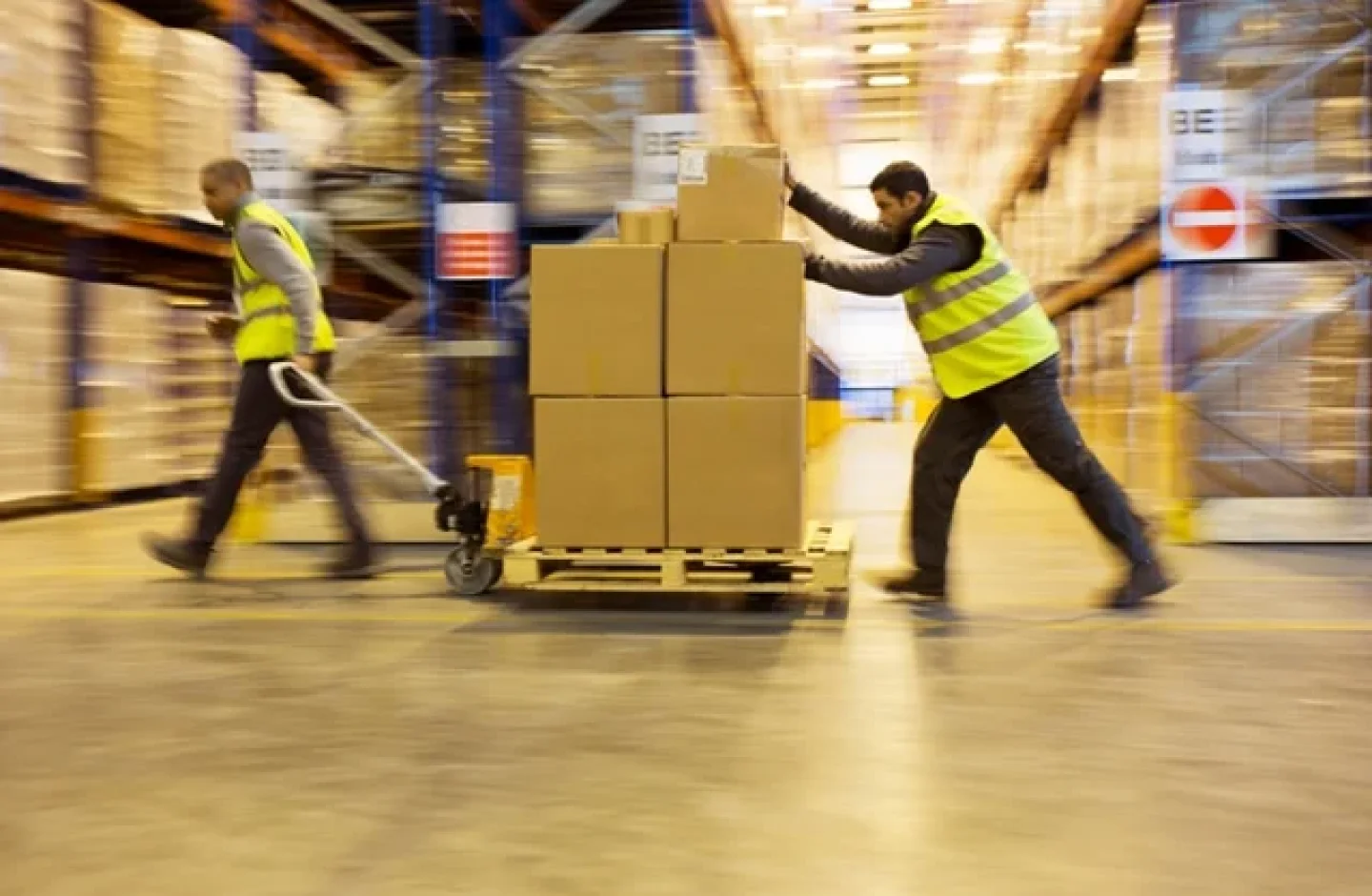
Step 1: Receiving Sets the Baseline for Everything Else
Receiving is not just unloading. It’s the first place where errors get locked into your day.
When receiving is inconsistent, everything downstream gets more expensive. Pickers lose time chasing inventory. Supervisors get pulled into exceptions. Customer service can’t give confident answers. And your team starts relying on workarounds instead of the system.
If you want receiving to support faster fulfillment, focus on two things: verification and clear disposition. For a more detailed breakdown of what to tighten on the dock, our guide to receiving process optimization covers practical fixes that improve speed without sacrificing accuracy.
Verification means confirming what actually arrived—SKU, quantity, and any required attributes like lot/serial when applicable. Clear disposition means deciding what happens next and recording it consistently: cross-dock, staging, quarantine, quality hold, or putaway.
Yes, it takes discipline. But disciplined receiving prevents “mystery inventory,” and that’s one of the biggest unlocks for stable order processing.
Step 2: Putaway Decides Your Picking Speed—Whether You Intend It or Not
Putaway drives picking performance more than most teams realize. When putaway turns into “find an empty spot and drop it,” the warehouse absorbs the cost later. Travel time goes up, replenishment gets more frequent, and location errors start showing up during picking. That’s how you end up with pickers stopping mid-task to track product down, or grabbing from the wrong slot because the label on the rack and the location in the system don’t line up.
The fix isn’t complicated, but it does require intent. Put product away based on how you actually ship it. Keep fast movers closer to the forward pick area. Store items that move together in a way that reduces zig-zagging across zones. And make location confirmation non-negotiable. If you don’t confirm putaway, you’re building tomorrow’s exceptions into today’s work.
You don’t need an advanced slotting program on day one. Start with clear putaway rules that match your order profile, then tighten them as you learn what’s working.
Step 3: Replenishment Keeps Picking From Turning Into a Hunt
Reactive replenishment is one of the fastest ways to make picking feel unpredictable. This is also where a lot of warehouses lose time without noticing it on the dashboard. A picker hits a location and it’s empty, so the task turns into a mini investigation. The worker scans nearby slots, flags down a lead, walks to overstock, tries a substitute, or waits for someone to bring product over. That kind of stop-and-start work adds up quickly, and the operation reads it as a picking problem when the real issue is replenishment discipline.
The goal is simple: don’t let pick faces go empty during the pick window. That requires defined triggers (min/max, forward pick thresholds, or task generation logic), plus clear ownership—who is responsible for replenishment, when it happens, and what takes priority.
Once replenishment runs on a rhythm, picking gets smoother, and your best workers spend more time producing instead of searching.

Step 4: Order Release Should Match Capacity, Not Optimism
Here’s a common trap: releasing too much work too early. It looks productive because the floor is busy. But “busy” isn’t the goal. Controlled flow is the goal.
When you flood the floor, you create congestion, priority switching, and constant interruptions. That drives errors up and productivity down. Instead, order release should pace work based on the reality of your labor, equipment, staging space, and carrier cutoffs.
Whether you use waves, batch/cluster picking, or continuous release, the principle is the same: release work in a way your team can actually execute cleanly, not in a way that just makes the queue look full.
Step 5: Picking Is Your Biggest Labor Lever
Picking usually carries the biggest share of fulfillment labor. That’s why small improvements here compound quickly.
But picking isn’t just “work faster.” In most warehouses, picking slows down for predictable reasons: too much travel, poor slotting, unclear locations, inventory mismatches, and exception-heavy workflows. When you fix those root causes, productivity rises naturally without squeezing your team. If picking is your biggest time sink, our guide on picking process optimization covers the most reliable ways to cut travel, reduce errors, and keep pickers in flow.
One of the fastest wins is reducing travel through better slotting—especially for your highest-velocity SKUs. You don’t need to rearrange the whole warehouse. Even a targeted improvement around top movers can cut walking and reduce congestion near packing and shipping.
Another high-impact move is scan confirmation at pick. It’s not just about catching wrong items. It creates a clean data trail so you can see what’s really happening—wrong location, wrong label, wrong inventory, or true picking error. That visibility is what helps leaders fix process, not just symptoms.
Since issues often show up at the handoff between picking and packing, improving the full pick and pack process can reduce rework and prevent avoidable shipping errors.
Step 6: Packing Is Your Last Real Quality Gate
Packing is the final moment you can prevent a customer-facing failure. If your pack stations are disorganized, supplies are inconsistent, or packers are constantly dealing with exceptions, people will rush and improvise. A well-designed warehouse packing station setup helps prevent those bottlenecks by keeping supplies, layout, and workflow aligned with the volume you’re pushing through.
A strong packing process includes a simple, repeatable verification step. It doesn’t have to be slow. It just has to be consistent. When packing becomes a quality checkpoint instead of a speed-only station, accuracy improves and customer issues drop.
Packaging matters here, too. If dimensional charges and damage claims impact your margins, carton selection and measurement discipline need guardrails. Otherwise, cost control becomes impossible because every packer makes different choices under pressure.
Step 7: Shipping Is the Handoff Where Proof Matters
Shipping is where everything has to come together—carrier compliance, labeling, staging discipline, and documentation. If outbound staging is messy, your team ends up reconciling what shipped after the fact. That’s where you lose time and create risk—missed pickups, misloaded orders, and “we can’t prove it” disputes.
This is also where proof capture can protect you. The point isn’t bureaucracy. The point is removing uncertainty later. When you can confidently show what shipped, when it shipped, and in what condition, disputes become easier to resolve—and they cost less.
The KPIs to Track Speed, Accuracy, and Flow
I’m a big believer in KPIs—but only the ones that help you run the business, not just report it.
A solid baseline set usually includes:
- Internal order cycle time (release to shipped)
- Pick accuracy (right item, right quantity)
- Pack accuracy (contents, labeling, documentation)
- OTIF performance (on-time, in-full delivery)
- Exception rate (how often work stops due to missing/incorrect inventory, damage, unclear instructions)
- Empty pick face events (a clear signal replenishment is failing)
You don’t need a dozen dashboards. Start with a handful of measures that expose friction, review them weekly, and tie them directly to the process changes you’re making.
What Slows Orders Down in the Warehouse
Slowdowns usually come from a few repeat issues that show up every day. When the system shows inventory available but the location comes up empty, the problem is upstream—receiving, putaway confirmation, or location accuracy. Until that’s fixed, picking stays unstable because the floor can’t trust what it’s being told.
Excess walking is almost always a layout or slotting issue. If fast movers are spread out or stored far from forward pick and packing, productivity drops no matter how strong the team is. Tightening slotting and shortening travel paths improves output without pushing people to rush.
Unowned exceptions create constant interruptions. Supervisors end up acting as traffic controllers instead of running the operation. Clear exception codes, defined owners, and a consistent handoff process keep issues from stalling the line.
Erratic work release creates the same cycle every shift: congestion, priority changes, then dead time. A paced release—built around labor, equipment, staging space, and carrier cutoffs—keeps flow steady and improves throughput without adding headcount.
How To Improve Order Processing Without Overwhelming the Operation
If you want improvements that actually stick, don’t try to change everything at once. Improve in layers.
Start by stabilizing inbound truth (receiving and putaway confirmations). Then protect picking flow (replenishment discipline and travel reduction). Then strengthen outbound quality (packing verification and shipping proof). Once those foundations are in place, refine how you pace and release work.
That approach works because it reduces decision-making on the floor. The less your team has to “figure out” in the moment, the faster and more accurate the operation becomes.
Where Cyzerg Fits In An Order Processing Improvement Project
Order processing problems rarely come down to training alone. Most of the time, the breakdown happens because the workflow, the systems, and day-to-day execution aren’t aligned. If you’re trying to reduce handoff friction across tools and teams, this supply chain orchestration guide is a solid overview of how orchestration keeps work moving with clearer ownership and fewer gaps.
Cyzerg helps warehouse and distribution teams close those gaps. We map the workflow end to end, tighten the handoffs, and improve how data gets captured on the floor so the operation can rely on what the system says. When the process is clear, we also help implement and integrate the warehouse technologies that support it—and keep the IT foundation stable so your operation isn’t one outage away from a bad day.

Conclusion
Order processing is one of the most practical places to improve warehouse performance because it touches speed, accuracy, labor efficiency, and customer experience all at once.
If you want better results, don’t start by telling your team to move faster. Start by making the workflow easier to execute: disciplined receiving, intentional putaway, reliable replenishment, controlled work release, and consistent pack-and-ship standards. Once those pieces are in place, throughput rises and errors drop, because the operation stops fighting itself.
For more information about streamlining warehouse operations or the latest warehouse technologies trends, follow us on LinkedIn, YouTube, X, or Facebook. If you have other inquiries or suggestions, don’t hesitate to contact us here. We’ll be happy to hear from you.
FAQs About Order Processing
1) What is order processing in a warehouse?
Order processing is the workflow that turns an order into a shipment, including picking, packing, shipping, and the system confirmations that keep inventory and tracking accurate.
2) What are the steps in warehouse order processing?
Most warehouses follow the same flow: receiving → putaway → replenishment → order release → picking → packing → shipping → returns handling.
3) What slows down order processing the most?
The biggest slowdowns come from inventory/location inaccuracies, empty pick faces, excessive walking, unclear exception ownership, and inconsistent work release.
4) What KPIs should a warehouse track for order processing?
Start with internal order cycle time, pick accuracy, pack accuracy, exception rate, and OTIF (on-time, in-full).
5) What are the best practices for order processing?
Keep inventory accurate, confirm putaway, prevent empty pick faces, reduce walking, standardize packing checks, and keep outbound staging clean.
6) What’s the fastest way to improve order processing?
Fix the biggest source of rework first—usually receiving accuracy, replenishment discipline, or travel time in picking.